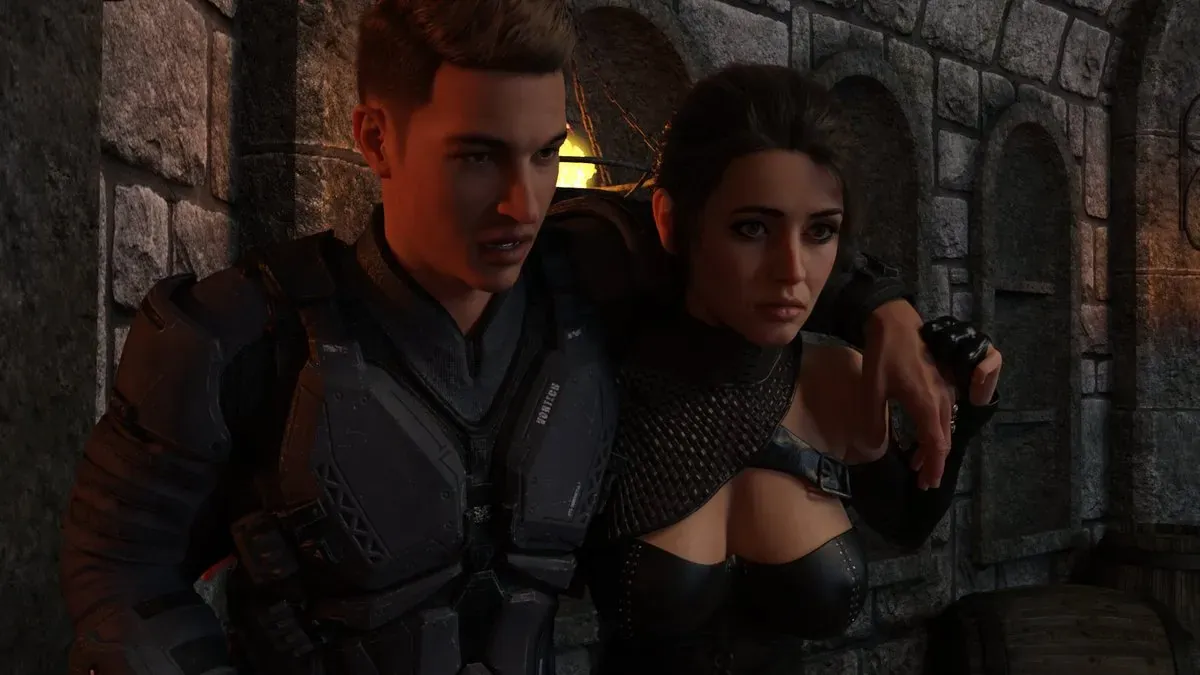
How to Fix the Future
Play How to Fix the Future
How to Fix the Future Screenshots
















How to Fix the Future review
Master every choice, mission, and secret in this thrilling visual novel adventure
Ever jumped into ‘How to Fix the Future’ and felt lost in its time-travel twists and high-stakes missions? This visual novel hooked me from the first playthrough—waking up in a dystopian world, racing to alter history by targeting key figures like Derek. I remember my initial run: fumbling choices left Chloe stuck, missions failing spectacularly. But after grinding academies and decoding old corp files, I nailed multiple endings. In this guide, I’ll share actionable steps to fix your gameplay, uncover tech secrets, and dominate every scenario. Whether you’re battling in 2023 or navigating team dynamics, let’s turn your frustrating restarts into epic wins.
Mastering Core Mechanics in How to Fix the Future
Let me paint you a picture of my first attempt at fixing the future. 🎨 I’d just started my How to Fix the Future gameplay journey, feeling like a time-traveling superhero. My first major time travel mission was going sideways—fast. A character was pleading for their life, and I had seconds to choose. Thinking I was being merciful, I spared them. The mission completed, but the victory felt hollow. Returning to the present, I was greeted with a grim newscast: my “merciful” choice had inadvertently sparked a corporate war that destabilized the global economy. Game over. ☠️ I’d completely misunderstood how visual novel choices work in this world. They aren’t just dialogue fluff; they’re the architecture of reality itself.
That failure taught me everything. In How to Fix the Future, every decision is a brick in the road to your ending. This chapter is your blueprint. We’re going deep on the core systems so you can master every choice, mission, and secret.
What Makes Choices Impact Your Timeline?
The heart of How to Fix the Future gameplay is its cause-and-effect engine. Unlike simpler visual novels, choices here create branching timelines with tangible, often delayed, consequences. You might not see the result of a decision until missions later, when an ally you slighted fails to back you up, or a piece of intel you ignored becomes the key to survival.
Think of it like this: the game is constantly building a profile of your agent’s morality, resolve, and leadership. Major visual novel choices are often labeled with traits like [Willful], [Compassionate], or [Calculating]. Consistently picking choices from one alignment will shape how characters perceive and interact with you. This reputation directly unlocks or locks certain best ending paths.
For instance, one of the most pivotal moments is deciding the fate of a key figure in 2023. This isn’t just a moral quandary; it’s a statistical pivot point that ripples across your entire save file.
To visualize the weight of these decisions, let’s break down a few critical junctions:
| Choice | Timeline Impact | Stat Gains | Ending Potential |
|---|---|---|---|
| Eliminate the 2023 Target | Immediately cuts off a major antagonist’s rise to power, simplifying later corporate conflicts but creating a power vacuum. | +Major Combat, +Calculating Reputation | Locks out “Reconciliation” endings; strongly favors “Corporate Dominance” or “Silent Guardian” paths. |
| Spare the 2023 Target | Allows a dangerous rival to live, leading to more complex, high-stakes missions in later acts. Unlocks unique dialogue and evidence chains. | +Diplomacy, +Compassionate Reputation | Essential for “True Peace” or “Exposed Truth” endings. Can lead to a formidable late-game enemy. |
| Share Intel with the Full Team | Builds immense trust, making team members more likely to confide in you and offer optional mission support. | +Team Cohesion, +Chloe’s Loyalty | Crucial for endings that require a united team. Unlocks special group tactics. |
| Withhold Intel “For Their Safety” | Protects short-term operational security but fosters suspicion. Some members may undertake rogue, dangerous actions. | +Independent Operations, +Stealth | Can lead to solo or “Lone Wolf” ending paths where you bear the burden alone. |
The key takeaway? There is rarely a universally “good” or “bad” choice. There are only consequences. Your playstyle defines your future. Want a ruthless, efficient timeline? Embrace those [Calculating] prompts. Aiming for a harmonious resolution? You’ll need patience and a steadfast [Compassionate] heart. 🌈
Navigating the Academy Training System
Between time travel missions, your home base is the Academy. This isn’t downtime—it’s your strategic workshop. Ignoring this phase is the #1 reason players hit skill checks they can’t pass later. My academy training guide is simple: treat every day like you’re prepping for the final exam of history itself.
The Academy is split into three core pillars, and balancing them is your secret weapon:
- Physical & Tactical Prep: The combat sims aren’t just for show. Regularly training here directly boosts your success chance in field operations. I made it a rule to hit the sims after every mission, and suddenly those optional “secure the extra evidence” objectives became achievable.
- Technical & Historical Lectures: Pay attention in class! 🧠 These sessions passively unlock critical context for missions. That obscure 21st-century corporate merger lecture? It might hold the clue to bypassing a security system in your next jump. This is also where you passively boost skills that help you understand the corp database files you’ll find.
- Team Bonding: This is the most important pillar. Talking to Chloe, Kaito, and the others in the commons isn’t just filler dialogue. It’s where you deepen relationships, learn their personal triggers, and unlock their unique abilities. For example, strengthening your bond with Chloe directly enhances her Chloe tech skills, giving you better hacking minigame bonuses and access to deeper data decryption on missions.
Pro Tip: Your dialogue choices during bonding moments also feed into your reputation traits. Comforting a teammate might be a [Compassionate] act, while pushing them to focus on the mission might be [Willful].
Here are 5 quick, actionable Academy tips to implement immediately:
- Prioritize Combat Sims Early: A +20% mission success chance from upgraded skills is a game-changer for gathering more resources and intel from your first few jumps.
- Never Skip Chloe’s Tech Talks: Each one permanently upgrades your interface for hacking and data analysis, making corp database files easier to crack open.
- Use “Free Time” Strategically: The game gives you pockets of time. Spend one with a team member whose profile shows low “Sync” rate. High Sync unlocks dual commands in missions.
- Revisit Lectures After Major Finds: If you discover a strange corp database file in the field, go back to the lecture hall. Often, a new, relevant lecture will have unlocked, providing the context you need.
- Log Your Findings: The game has a codex for a reason. Reading unlocked entries sometimes triggers new conversation options with your team, leading to more stat boosts.
Unlocking Hidden Files and Team Profiles
Information is your most powerful weapon across time. Scattered throughout your missions are encrypted corp database files and private team profiles. Finding them is one thing; understanding them is what separates a good agent from a future-saving legend. 🔍
The corp database files are golden tickets. They don’t just contain mission objectives; they hold personnel preferences, psychological profiles, secret project codes, and blackmail material. Early on, I found a file simply titled “Executive Dietary Preferences.” I almost ignored it. Later, I was trying to infiltrate a gala. That file gave me the clue to impersonate a waiter and swap a keycard by serving the right vintage of wine. My eureka moment came when I decoded a file labeled “Project Phoenix Backup Logs.” It revealed that a seemingly doomed character in 2042 had a survival protocol I could activate, completely saving a run I thought was lost.
Here’s how to leverage them:
* Cross-Reference Everything: A name in a 2023 file might be the CEO you meet in 2051. The game’s timeline tool lets you connect these dots.
* Decryption is Key: This is where Chloe tech skills come in. Investing in your bond with her and choosing tech-focused upgrades makes decrypting these files faster and more complete, often revealing extra paragraphs of crucial intel.
* Beware of Data Traps: Some files, especially those with tags linking to entities like the NSA, can be traps. Accessing them without proper stealth protocols can alert the timeline security and make your next mission a hostile escape sequence instead of a stealth op.
The private team profiles you can uncover are equally vital. Learning that Kaito has a tell when he’s lying, or that a certain phrase will cause Maya to shut down emotionally, allows you to navigate team conflicts perfectly. This insider knowledge is often the deciding factor in keeping your squad united for the toughest best ending paths.
Mastering these three core mechanics—the weight of choices, the discipline of the Academy, and the power of information—builds the foundation for every successful run. You’ll stop reacting to time and start shaping it. But this is just the beginning. Once you’re comfortable here, the real fun begins: manipulating long-term causality, executing perfect multi-era missions, and assembling the pieces for the game’s true, most secret finale. 🕰️✨
Ready to move from apprentice to master of time? In our next chapter, we’ll dive into advanced timeline strategy and the precise steps to unlock the “Golden Horizon” ending.
Diving into ‘How to Fix the Future’ transformed my gaming nights from chaotic trial-and-error to strategic triumphs—mastering choices, academy drills, and those game-changing files made every timeline feel conquerable. You’ve got the tools now: tweak your paths, build your team’s edge, and chase those perfect endings. My top tip? Replay with Chloe’s full profile unlocked; it unlocks secrets I wish I’d found sooner. Grab your controller, hit play, and fix that future yourself—share your wildest runs in the comments. What’s your go-to mission strategy?