
Realm Invader
Play Realm Invader
Realm Invader Screenshots



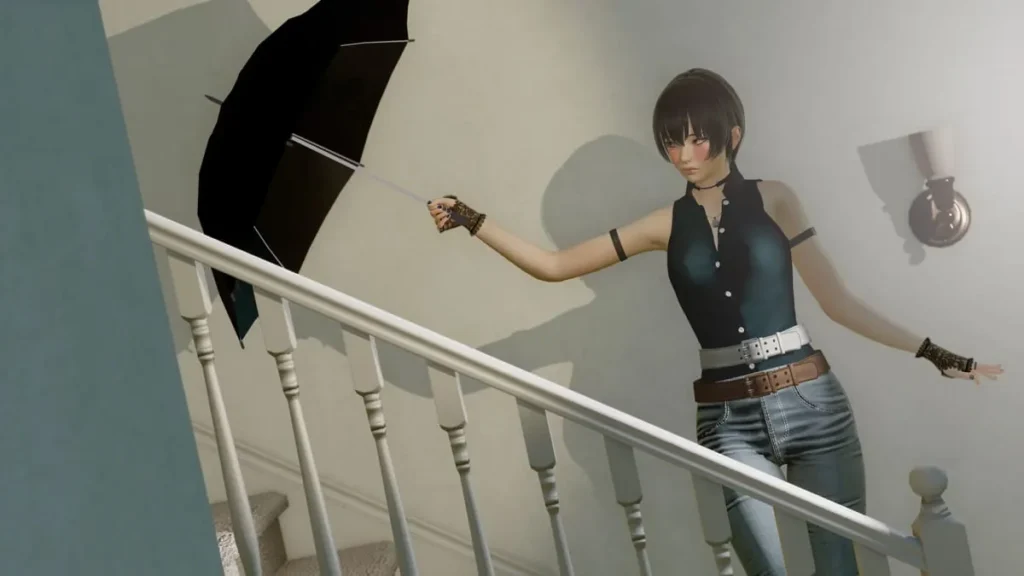






Realm Invader review
Explore the multiverse adventure, gameplay mechanics, and what makes this title unique
Realm Invader stands out as an ambitious narrative-driven experience that takes players on a multiverse journey unlike anything else in its genre. The game centers on a protagonist unexpectedly pulled from their reality into another dimension, where they encounter mysterious figures offering guidance through this strange new world. If you’re curious about what makes Realm Invader worth your time, this guide covers everything from core gameplay mechanics to the compelling story elements that keep players engaged throughout their adventure.
Understanding Realm Invader: Plot, Setting & Core Premise
Ever felt like you’ve played the same hero’s journey a hundred times? You know the drill: chosen one, dark lord, save the world. 🥱 I certainly had. That’s why, when I first booted up Realm Invader, I was braced for more of the same. What I got instead was a narrative gut-punch that completely reframed what a video game story could be. It’s not about saving a world; it’s about surviving, understanding, and perhaps even fixing an infinite cascade of them.
This chapter is where we dive deep into the heart of it all. If you’ve ever wondered what is Realm Invader about at its core, you’re in the right place. We’re pulling back the curtain on the breathtaking Realm Invader world building, the emotional Realm Invader protagonist story, and the genius Realm Invader reality hopping mechanics that make this title a standout. Forget everything you know about linear stories—this is a journey through the cracks in reality itself.
The Multiverse Concept and Reality-Hopping Mechanics
At its heart, Realm Invader asks a thrilling, terrifying question: what if home was just one page in an infinite book, and someone just ripped you out of it? 🌌 The core premise isn’t just a gimmick; it’s the engine for everything—the plot, the puzzles, the profound sense of alienation. The Realm Invader multiverse gameplay is built on the idea that every reality has its own rules, both physical and narrative.
You don’t just fast-travel between zones. The act of shifting is disruptive, often dangerous, and always consequential. One moment you’re solving a puzzle using gravity manipulation in a cyber-realm, the next you’re in a feudal world where technology is considered dark magic, and your very body has been “translated” to fit local laws of physics. This constant recalibration is the soul of the Realm Invader reality hopping mechanics. It’s not just where you go, but how you arrive and what you become in the process.
Let me give you a concrete example from my own playthrough. Early on, your character, Aris, is in their own relatively modern city. A strange, localized storm appears—not in the sky, but wrapped around a public monument. Investigating it doesn’t trigger a cutscene so much as a system failure. The screen glitches, the sound distorts, and suddenly, you’re falling. Not through air, but through blurred, jagged landscapes that flash before your eyes. You crash-land not in a new area of your city, but in a silent, frozen forest where two moons hang in a violet sky. Your HUD is gone. Your equipment menu shows unfamiliar icons. The immediate consequence isn’t a combat tutorial; it’s a quiet, terrifying moment of realization. Your mission is no longer defined by a quest log. It’s defined by a single, primal need: understand where you are, and how to survive it.
This mechanic is brilliantly woven into progression. You might find a key item in a steam-punk realm, but it’s just a piece of junk until you hop to a digital realm where it’s recognized as a corrupted data-core that can be “compiled” into a usable weapon. The Realm Invader multiverse gameplay forces you to think in four dimensions, collecting possibilities and solutions across realities.
| Realm Type | Core Rule Shift | Gameplay Impact |
|---|---|---|
| The Verdant Weave (Prime) | Biological Tech: Tools are grown, not built. | Puzzles involve nurturing plants to create bridges, weapons, and tools. Combat is fluid, using organic projectiles. |
| Neo-Kyoto (Cyber) | Data is Physical: Digital streams form solid structures. | Platforming on moving data highways. “Hacking” environments by physically rearranging glowing data blocks. |
| Chronos Basin (Desert) | Time is a Resource: Can be harvested and spent. | Solve puzzles by briefly rewinding environmental elements. Combat requires timing “time-dilation” bursts to slow enemies. |
| The Silent Cathedral (Gothic) | Sound has Power: Silence is a void, noise shapes matter. | Stealth is paramount. Solving puzzles requires creating specific frequencies by interacting with the environment in sequence. |
This constant shifting is what makes the Realm Invader multiverse gameplay so endlessly engaging. You’re never mastering one world; you’re learning the fluid grammar of dozens. It keeps you perpetually off-balance in the best way possible, turning every new portal into a leap into the unknown. 🚀
Character Development and Protagonist Journey
Now, a cool mechanic is nothing without someone we care about experiencing it. This is where the Realm Invader protagonist story truly shines. You play as Aris, who starts as an everyperson—not a soldier, not a sorcerer, just someone in the wrong place at the worst possible time. This is crucial. Their initial motivation isn’t glory or destiny; it’s sheer, desperate confusion and a bone-deep longing for the home they can’t get back to.
The Realm Invader character development is directly fueled by the multiverse. Each realm doesn’t just challenge Aris’s skills; it challenges their fundamental beliefs. In a realm of perpetual war, their innate pacifism is tested. In a hyper-logical AI-driven society, their human empathy is seen as a glitch. I remember a profound moment in a realm called “The Echoing Archive,” a library dimension. Aris, frustrated and scared, finally breaks down and shouts, “I just want to go home!” The environment, sensitive to strong emotional signatures, reacts by materializing books filled with images of their lost city—but they’re distorted, fictionalized accounts. It’s a heartbreaking reminder that home is becoming a story, even to them. 😢
This brings us to the guide, a mysterious figure known only as The Librarian. 🕵️♂️ They’re not a traditional helper. They’re cryptic, sometimes withholding, and clearly burdened by a deeper knowledge of what’s happening. The Librarian doesn’t give quests; they give context. They appear in different forms in each realm—a hologram here, a spirit there—always observing, always hinting that these reality ruptures are not a natural accident. Their role is to slowly peel back the layers of the central mystery: why is this happening, and why to Aris specifically?
Your relationship with The Librarian is the backbone of the Realm Invader plot summary. Are they a mentor? A manipulator? A fellow victim? The game lets you shape this through dialogue choices and actions. Trust them with a discovery, and they might open a new path. Challenge their secrets, and they might isolate you, forcing you to find harder solutions. This dynamic makes the plot feel deeply personal. You’re not being fed a story; you’re arguing, cooperating, and unraveling it with a companion whose true agenda is the game’s biggest enigma.
By the final acts, Aris’s transformation is palpable. They move from a reactive victim to a proactive traveler, and potentially, to a decisive force. The Realm Invader character development arc is about forging an identity when your original one has been lost. Do you become a passive tourist of the multiverse, a protector of its fragile realms, or something else entirely? The choice, beautifully, feels earned through every struggle.
World-Building and Atmospheric Design
If the multiverse is the stage and Aris is the actor, then the Realm Invader world building is the breathtaking set design, lighting, and soundtrack that sell the entire performance. 🎭 This game understands that world-building isn’t about lengthy lore dumps in menus; it’s about environmental storytelling that you feel in your gut.
Each realm is a masterclass in atmosphere. The team didn’t just create different visual palettes; they created different sensations. The Verdant Weave hums with life—you hear constant insect chirps, distant animal calls, and the creak of giant bioluminescent plants. Neo-Kyoto buzzes with digital noise and the low murmur of synthesized ads. The Silent Cathedral is so quiet that your own footsteps are deafening, making every minor sound you create feel like a violation. This attention to auditory detail is a huge part of the Realm Invader world building, making each transition a shock to the senses.
Pro Tip: Play with headphones. The sound design isn’t just background; it’s a critical navigation and puzzle-solving tool, especially in sound-based realms.
The narrative unfolds through what you see and interact with, not just what you’re told. You’ll piece together the history of a fallen empire by observing the half-buried statues and the way local creatures have adapted to living in its ruins. You’ll understand the tragedy of a flooded city by finding the personal effects floating in its crystalline waters—a locket here, a child’s datapad there. This method of discovery is incredibly rewarding. You become an archaeologist of the present, assembling stories from fragments across dimensions.
The pacing of this revelation is masterful. The game starts with intimate, confusing jumps between vastly different realms, emphasizing isolation. As you and The Librarian piece together clues, you begin to find “adjacent” realms—worlds that share a common catastrophic event or cultural thread. This creates a web of connections, suggesting that these realities aren’t randomly scattered, but are somehow tragically intertwined. It transforms the journey from a series of bizarre pit-stops into a cohesive, tragic mystery.
So, what makes this multiverse concept so uniquely engaging? It’s the emotional stakes. Many games have you save the world, which is abstract. Realm Invader makes it personal by first taking your world away. The drive isn’t to be a hero; it’s to be whole again. This foundational sadness gives weight to every beautiful, strange, or horrifying world you visit. You’re not just exploring for loot; you’re searching for meaning, for a thread that could lead you back, all while knowing that with every hop, “back” might be fading further away. This poignant core is what truly differentiates Realm Invader and makes its Realm Invader multiverse gameplay resonate on a deeply human level.
FAQ: Unraveling the Mysteries of the Plot
As you dive into the layers of Realm Invader, questions are part of the journey. Here are some common ones I had, answered without spoilers.
How are the different realities connected within the game?
While initially seeming random, realms are connected by “Resonance Events”—cataclysmic or profound moments that echo across the multiverse, creating similar archetypes, tragedies, or even physical laws in otherwise disparate worlds. Finding these echoing threads is key to understanding the larger fracture.
Is there a central timeline, or is everything happening at once?
This is a brilliant part of the Realm Invader plot summary. From Aris’s perspective, time is linear. However, the realms themselves exist on their own timeflows. You might spend a week in one realm, hop to another, and return to find only seconds have passed in the first. The Librarian hints that a “true timeline” is one of the first casualties of the dimensional instability.
Does the protagonist’s original world play a role later?
Absolutely. The question of “what is Realm Invader about” is inseparable from the mystery of Aris’s home reality. It isn’t just a starting point; it’s a central piece of the puzzle. Understanding why it was the first point of breach is critical to the endgame. You will learn more about it, often in ways that are surprising and emotionally charged.
How do my choices affect the story and character development?
Your choices primarily shape your relationship with The Librarian and define Aris’s evolving personality. Are they compassionate, pragmatic, defiant, or curious? These dispositions can unlock unique dialogue with realm inhabitants, alter certain puzzle solutions, and influence which facets of The Librarian’s knowledge are revealed, leading to different narrative payoffs and endings that reflect the identity Aris has forged across the dimensions.
Realm Invader delivers a compelling experience centered around multiverse exploration and character-driven storytelling. The game’s premise of being transported across different realities creates a unique framework for both narrative progression and player engagement. With its focus on meaningful character interactions and world-building across dimensions, Realm Invader offers something distinctive for players seeking immersive, story-rich experiences. Whether you’re drawn to the multiverse concept, character development, or the mystery of the guiding figure, this game provides layers of content worth exploring. If you’re considering diving into Realm Invader, approach it with an open mind and patience for narrative-driven gameplay that prioritizes story depth over rushed pacing.