
A Failure to Launch
Play A Failure to Launch
A Failure to Launch Screenshots









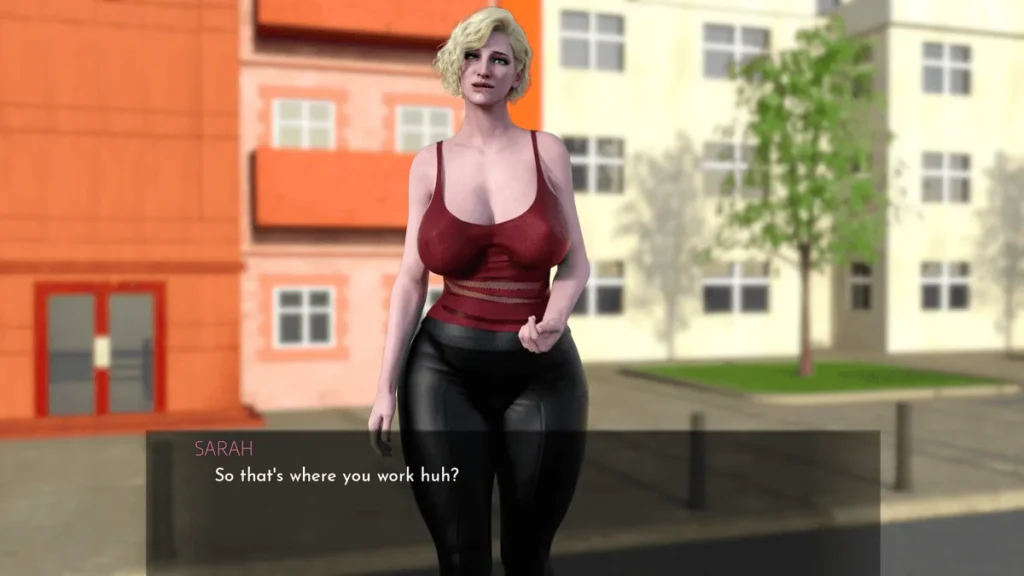
A Failure to Launch review
Dive into Alex’s Slothful Adventure with Futanari Twists
Ever felt stuck in a rut, glued to your screen while life passes by? That’s exactly where you step in with A Failure to Launch, the cheeky adult visual novel starring Alex, the ultimate slacker. Kicked out by his dad after a year of gaming and self-indulgence, Alex stumbles into a world embracing futanari acceptance. This A Failure to Launch porn game blends comedy, choices, and steamy encounters. I’ll share my own binge sessions, tips to unlock hidden paths, and why this Ren’Py gem hooked me for hours. Ready to launch Alex into action?
What Makes A Failure to Launch Gameplay So Addictive?
I remember the first time I stumbled into Alex’s slacker story. It was a late night browsing for something different, and the concept of a 21-year-old getting evicted for being too lazy immediately hooked me. But what really grabbed my attention was the world itself—a place where futanari world acceptance wasn’t just a theme, it was the norm. The protagonist, Alex, isn’t your typical hero. He’s messy, unmotivated, and completely relatable. Watching him navigate a society where women have “extra” features, all while trying to find his next couch to crash on, felt refreshingly honest. This isn’t a power fantasy; it’s a dive into what happens when you let life slide, and the game makes you own every single lazy choice.
Who Is Alex and Why Follow His Slothful Journey?
Let me paint you a picture of Alex. He’s the guy who orders takeout three times a day, not because he can’t cook, but because walking to the kitchen feels like a marathon. When his landlord finally kicks him out for not paying rent—surprise, surprise—he’s forced into a world he never bothered to understand. This is where the magic of A Failure to Launch gameplay shines. You aren’t guiding a superhero; you’re steering a disaster. The women he meets are incredibly diverse, each with their own quirks and, yes, anatomical surprises. The game doesn’t preach or explain why this world works this way. It just is. That casual futanari world acceptance is what makes it feel so immersive. You learn alongside Alex, who is too tired to question anything. He just accepts the situation because, frankly, arguing requires effort.
I found myself rooting for him in a weird way. He’s not malicious, just lazy. That slacker energy is authentic. The developers have crafted a narrative where every interaction feels earned. You aren’t just clicking through dialogue; you are living the struggle of a guy who would rather nap than face his responsibilities. This is the core of the Alex slacker story—it’s a mirror held up to our own procrastination, but with a lot more humor and, well, unusual encounters.
Key Mechanics: Choices, Affinity, and Branching Paths
Now, let’s talk about what makes you stick around. The mechanical backbone of how to play A Failure to Launch is deceptively simple but deeply layered. At its heart, it’s a visual novel built on the Ren’Py engine, which keeps things smooth and responsive. But the devil is in the details. The game relies on three interconnected pillars: dialogue choices, a hidden affinity system mechanics, and truly diverse branching narrative paths. You don’t just pick a nice option or a mean option. You pick the lazy option, the snarky option, or the surprisingly competent option. Each one ticks a hidden box.
To help you visualize the core loop, here is a breakdown of the mechanics you will encounter most often:
| Mechanic | Description | Gameplay Impact |
|---|---|---|
| Dialogue Choices | Select responses from 3-4 options that define Alex’s attitude: Lazy, Snarky, Competent, or Neutral. | Directly influences which affinity meters rise or fall and unlocks specific scenes. |
| Affinity System | A hidden numerical tracker for each character relationship, from Hostile to Devoted. | Determines if you get romantic scenes, comedic interactions, or get locked out of entire story branches. |
| Branching Narrative | Story forks based on accumulated affinity and previous choices, leading to unique endings. | Massive **replayability**; no single playthrough will show you everything. |
| Light Puzzles | Simple inventory or logic tasks, like finding a key or remembering a code. | Breaks up dialogue and offers a chance for competence to show, possibly surprising certain characters. |
| Status Effect Blocks | Consequence of avoiding tasks (e.g., “Dirty Room” debuff reduces charm). | Direct feedback from the **Consequence of Comfort system**, forcing you to address neglect. |
This table covers the basics, but the real genius lies in how these systems interact. The affinity system mechanics are the secret sauce. You never see a numerical value, but you feel it. Choose to help someone too many times, and you might lose the “slacker” ending. I made the mistake of trying to be a good guy in my first run. Alex actually became stressed! The game punished me for not being lazy enough. That is brilliant design. It rewards you for staying true to the Alex slacker story.
The branching narrative paths are extensive. I found at least five distinct major routes in version 0.2.1, and that’s not counting the minor variations. One path leads to you living in a basement, another to a surprisingly wholesome relationship, and another to absolute chaos. This is uncensored content done right—it’s not just shock value. It serves the story and the characters. The Ren’Py engine handles all of this with zero glitches in my experience, making the exploration of these paths a smooth, addictive process.
How the Consequence of Comfort System Changes Everything
This brings me to the most innovative part of the game, and frankly, the reason I couldn’t stop playing. The Consequence of Comfort system is a genius feedback loop. In simple terms, it punishes you for succeeding too much or rewards you for staying true to your slothful nature. Remember, Alex is a slacker. So, if you start cleaning your room, doing your job, or showing up on time, the game pushes back. Characters react with suspicion. The environment becomes hostile to your new-found discipline.
Let me share a session that perfectly illustrates this. I was playing through a path where I decided to be proactive for once. I chose to go to work on time, pay a bill early, and clean the apartment. Big mistake. The Consequence of Comfort system kicked in hard. A character who relied on my messiness became jealous and started a fight. Another character, who liked me as a “project,” lost interest. I ended up with a debuff called “Suspiciously Competent,” which locked me out of three cozy, lazy scenes. It was hilarious and frustrating. I had to reload a save and go back to ignoring my phone and leaving dirty dishes out to get the story back on track.
This system forces you to think strategically about your sloth. It’s not about finding the “best” choice, but the most authentic choice for Alex. The game tracks every skipped task, every ignored call, and every mess left behind. These small actions reshape the world around you. You might find a character has moved out because you never fixed the sink. Or a new job opportunity appears because you were too lazy to go to your old one. This is the core of how to play A Failure to Launch effectively: you must embrace the failure.
The game doesn’t want you to win. It wants you to be comfortable in your loss.
For new players, understanding this is crucial. It flips the script on typical gaming goals. You aren’t accumulating power; you are accumulating consequences. The A Failure to Launch gameplay is uniquely addictive because every decision feels weighty, even the lazy ones. The Consequence of Comfort system ensures that your path is yours alone, shaped by what you didn’t do.
Final Tips for Mastering Your Descent
So, how do you survive and actually enjoy the trip? Based on my many hours of “research,” here are some actionable guidelines. These tips are designed to help you navigate the futanari world acceptance and the tricky affinity system mechanics without frustration.
- Prioritize the “Comfort” Challenges: In the early game, you will face challenges that tempt you to be active. Resist. The “Lazy” or “Ignore” option is often the key to unlocking the best slacker story content. Let messes accumulate. It unlocks new dialogue.
- Commit to a Single Persona: Don’t flip-flop. If you start as a snarky slacker, stick with it. The branching narrative paths are sensitive to consistency. A “nice” Alex in chapter two will undo your “lazy” progress in chapter one.
- Save Often, Save Differently: This is a rule for any Ren’Py game, but especially here. Use all 30 save slots. You will want to explore different consequences without replaying the entire first hour. The Consequence of Comfort system creates too many variables to leave to chance.
- Read Everything: The dialogue is the game. Every line offers a clue about the character’s preferences or a hidden task that, if ignored, will trigger a funny or romantic outcome. Don’t speed-click.
- Embrace the Weird: The futanari world acceptance isn’t just window dressing. Engage with it. Ask the wrong questions. Be awkward. The game rewards curiosity and leaning into the bizarre premise. It’s half the fun.
Ultimately, A Failure to Launch gameplay is about letting go of your need to optimize. This is a slacker’s paradise. The Alex slacker story is a masterclass in character-driven narrative, and the mechanics serve to reinforce that theme perfectly. If you are tired of saving the world and just want to relax, fail, and laugh at the results, this is your game. The how to play A Failure to Launch lesson is simple: stop trying, and you might just win.
There you have it—A Failure to Launch isn’t just a game; it’s a hilarious mirror to our own lazy moments, wrapped in futanari flair and smart choices. From Alex’s eviction to steamy discoveries, your decisions shape a world of comedy and pleasure. I’ve sunk hours into replays, and each path feels fresh. If you’re craving narrative-driven adult fun, grab version 0.2.1, dive in, and help Alex launch. What’s your first choice going to be? Share in the comments and let’s swap stories!